Network Digital Twin
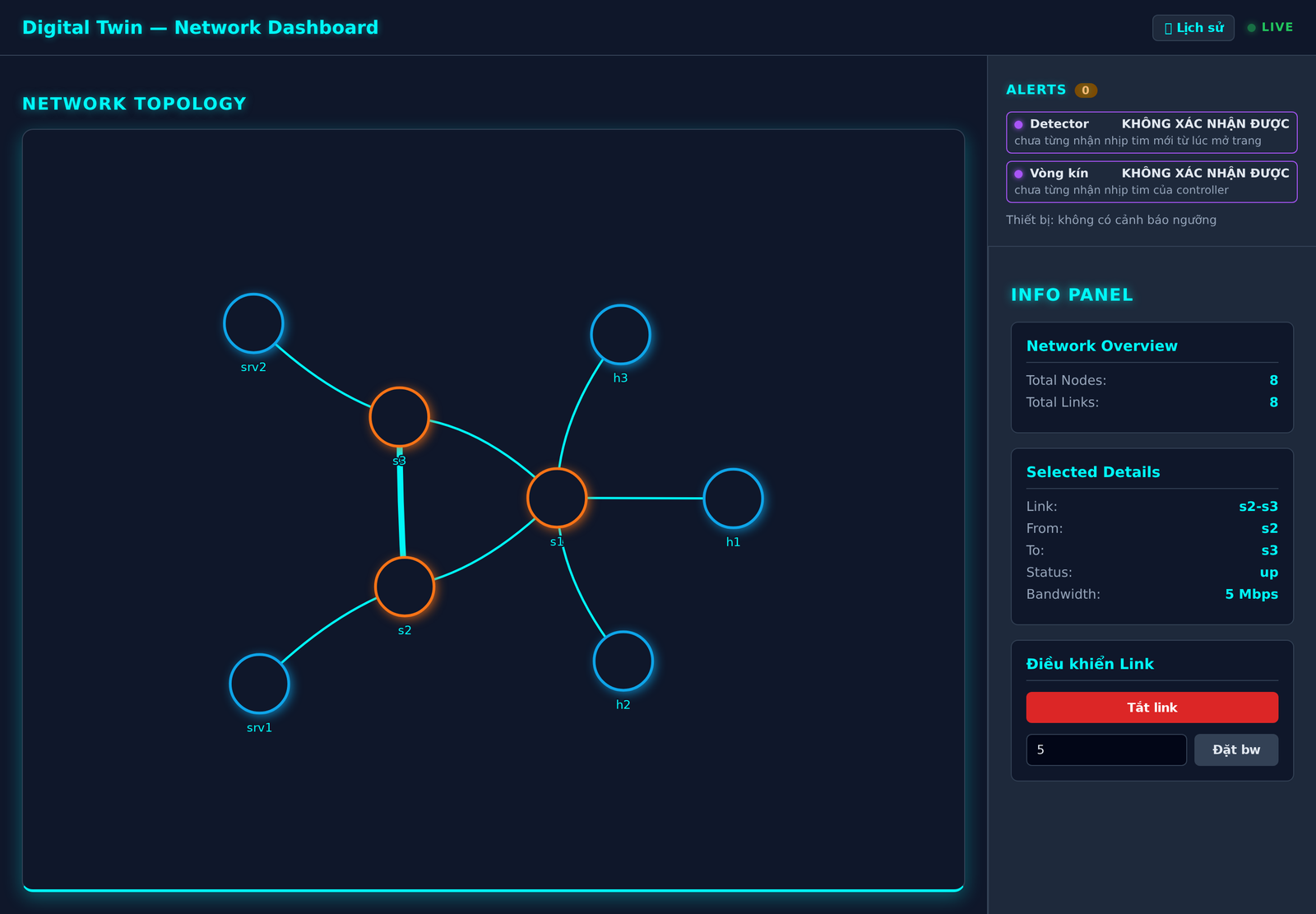
Connecting an SDN testbed to a living network model, with bidirectional synchronization, what-if analysis, and a closed control loop.
Research Advisor: Dr. Huynh Van Dang
Read case studyRESEARCH
Two connected studies: building a Network Digital Twin and examining the routing decisions a controller makes with imperfect information.
A Network Digital Twin is a digital representation of a network that uses operational data to reflect its state and support analysis, prediction, or control.
For load-changing routing actions, how do improvements in current-state information and action-response model fidelity differ and interact in their effect on expected decision regret?
In DT4N, I implemented the observation and control paths of an SDN testbed. The case study explains the architecture, how control actions are checked, and the limits of the experiments.
State-Model-Regret uses controlled two-path queueing models to separate the effects of current-state information and response modeling. It remains exploratory research; the case study records the comparison scope, evidence, and unresolved questions.
Each case study includes my role, methods, evidence, and limitations.
Connecting an SDN testbed to a living network model, with bidirectional synchronization, what-if analysis, and a closed control loop.
Research Advisor: Dr. Huynh Van Dang
Read case studyInvestigating how current-state information and action-response model fidelity interact in their effect on expected routing decision regret.
Research Advisor: Dr. Huynh Van Dang
Read case study